

Modernising industry across Southeast Asia
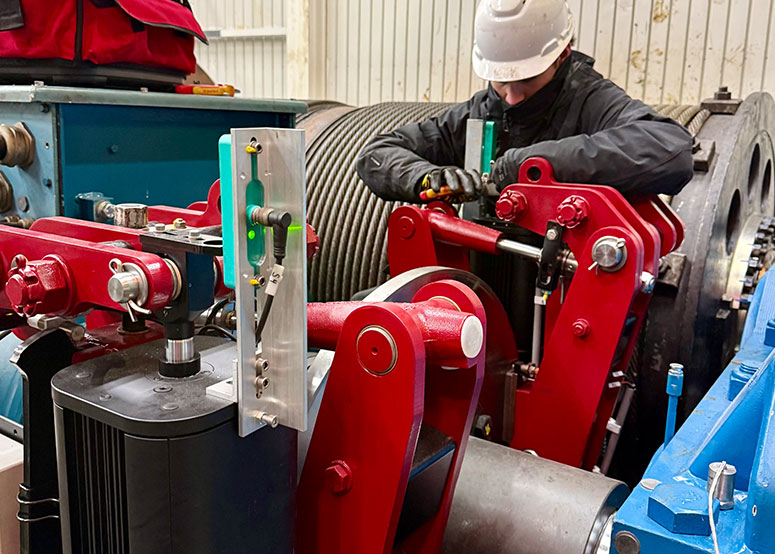
Heavy-duty brakes are ubiquitous in port and terminal operations — and retrofitting these systems is an area without limitation, says Laurens van Heukelum, sales manager Southeast Asia at Dellner Bubenzer.
Intermodal, shipping, and logistics professionals are increasingly discovering the endless potential surrounding retrofitting or upgrading the various types of heavy-duty braking systems that their operations rely on around the clock.
Retrofits represent a scope of work with virtually no limitations, allowing upgrades to be engineered, adapted, and integrated into almost any existing system. Southeast Asia is a particular hotbed of activity as we enter another year, with braking upgrade projects at ports and heavy industrial sites taking place from Brunei to Vietnam — and everywhere in between.
There are typically two main reasons to retrofit a heavy-duty brake. The first is to enhance performance, such as increasing load capacity or enabling higher operational speeds, which allows cranes and other lifting or handling equipment to complete more demanding tasks safely and efficiently. Upgrading components can improve braking consistency, reduce stopping distances, and better manage heat and wear, all of which contribute to more reliable operations.
The second reason is maintenance-driven, addressing inefficiencies or repairing worn or damaged systems. Over time, components can degrade due to friction, corrosion, or high duty cycles, leading to uneven braking or reduced stopping power. Retrofitting in these cases restores performance, extends service life, and can prevent costly downtime or safety incidents, making it a cost-effective alternative to complete system replacement.
Modern retrofits go far beyond like-for-like replacements. Each project can be tailored to the unique requirements of the crane, winch, or conveyor in question. Engineers consider everything from drum diameter and rope lay to environmental exposure, wind conditions, and duty cycles to ensure that the upgraded braking system delivers maximum performance and longevity. In Southeast Asia, where heat, humidity, monsoon rains, and saline coastal air accelerate wear and corrosion, these considerations are critical. Choosing the right materials, protective coatings, and sealed units can dramatically extend service life, while maintaining peak braking performance.
Global Business, Local Service
Retrofitting is a core function of Dellner Bubenzer globally.
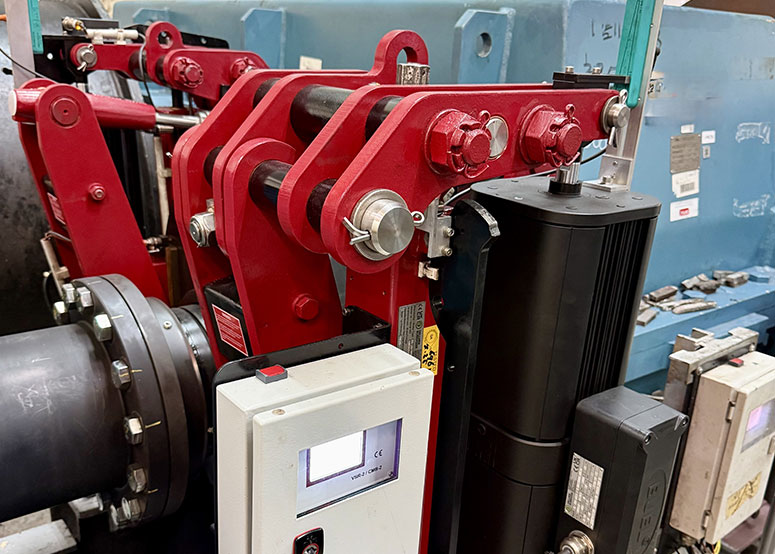
The company has service centres strategically located around the world, including four in Asia — two in China and others in Malaysia and Singapore. Each site has a full inventory of products, including the popular SB23.3 second generation brake, which can be equipped with a Buel H thruster to reduce energy by 60% and use a much lower volume of hydraulic oil, combining to lessen environmental impact.
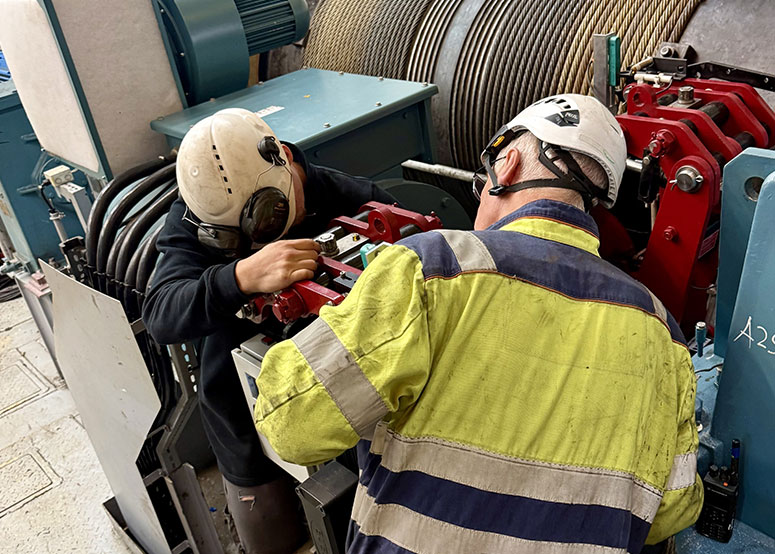
Additionally, customers have peace of mind in that company representatives can scramble to the point of use, whether that be miles offshore or deep underground. It is an after-sales and retrofit programme supported by local partners, such as Crane Service Asia, based in Thailand, that specialises in equipment inspection, commissioning and repair, most notably at port locations.
Thailand is a significant marketplace in this geography, largely because of the high volume of installed heavy-duty brakes. It represents, say, four times the potential for Dellner Bubenzer as the Philippines, for example, yet we repeatedly see the same pattern: legacy brakes struggling under increased operational pressures; components showing accelerated corrosion; and maintenance teams fighting recurring issues that never quite go away.
In all regions, for end users of heavy-duty braking systems, relying on a global manufacturer with local service depots offers a clear advantage over stocking their own spare parts. High-performance brakes are expensive, heavy, and complex, making storage and inventory management costly and cumbersome. Local support allows rapid access to replacement components, expert technical support, and on-site servicing, minimising downtime and ensuring equipment operates safely and reliably. This approach shifts the burden of inventory and technical expertise to the manufacturer, giving operators peace of mind and more predictable maintenance costs.
Retrofits solve these challenges by replacing outdated brake models with modern, high-torque, corrosion-resistant units that integrate seamlessly into existing systems. Crucially, today’s retrofit packages also introduce the benefits of condition monitoring and digital diagnostics, enabling operators to predict issues before they escalate and minimise unplanned downtime — a major competitive advantage in ports and logistics environments where every minute counts.
Consider that retrofitting heavy-duty braking systems can significantly improve a crane or industrial machine’s braking coefficient by replacing worn or outdated components with modern, higher-performance technologies. Upgraded calipers, pads, discs, or hydraulic systems deliver more consistent friction levels, better heat dissipation, and tighter tolerances, all of which increase braking efficiency and reduce stopping distances. Retrofitting also restores reliability by addressing environmental wear and aligning older equipment with current safety standards. The result is a measurable boost in braking force, stability, and operational safety without the cost of full system replacement.
Today’s retrofit packages also introduce the benefits of condition monitoring and digital diagnostics, enabling operators to predict issues before they escalate and minimise unplanned downtime.
Restricted Access
While the benefits of retrofitting braking systems are clear and obvious, that doesn’t mean it is an easy marketplace to serve. Only a fraction — say, 10% of the time — are we contacted by an end user or channel partner, presenting a problem with a brake they want us to look at. In the vast majority of cases, it is a more painstaking process of working with a facility’s management or engineering team to consult on continuous improvement of braking best practices. Oftentimes, we’re on a site, and we ask to peer under the bonnet, so to speak.
It’s prudent for a manufacturer like Dellner Bubenzer to be listed in a port’s tender documents as a preferred supplier or equivalent, but this process begins with early engagement with port authorities and their engineering consultants, showcasing technical capabilities, proven installations, and compliance with relevant international standards. Supplier pre-qualification is essential, including documentation of quality certifications, safety records, and service capabilities.
Building a strong regional track record, demonstrating reliability in demanding environments, and offering clear lifecycle support plans help assure decision-makers that the brand can meet operational and safety requirements. By combining technical credibility with local service readiness, a manufacturer can secure recognition in specifications and be named directly — or as an approved equivalent — in future tenders.
In addition to the aforementioned SB23.3 second generation brake and Buel H thruster, the complete Dellner Bubenzer product scope is part of the retrofit picture. The 91 kN DBRB brake, for example, secures a crane against wind force. In emergency conditions, they can be operated also as dynamic brakes to stop the crane. The brake shoes push on the two sides of a wheel, actuated by springs and released by hydraulic power. The EBN, meanwhile is a powerful drum brake that can also combine with the Buel H thruster; it offers automatic wear adjustment and braking torques from 325 to 6,920 Nm.
In conclusion, in applications around port terminals, bulk handling, mining, conveyors, and hot metal operations, heavy-duty brakes are critical to both safety and productivity. Retrofitting these systems should never be overlooked, as even small improvements can deliver measurable gains in performance, reliability, and operational efficiency.
Upgrading worn or outdated components ensures equipment can handle demanding workloads, reduce the risk of unplanned downtime, and extend service life. In these high-stakes environments, proactive retrofitting is not just good practice, it is essential for safe, efficient, and cost-effective operations.
TOC Asia Brakes Showcase
Dellner Bubenzer recently exhibited at the TOC Asia show, which took place in late November at Marina Bay Sands, Singapore. TOC Asia was once again the complete event experience; it has connected the global port and container supply chain community across the Asia-Pacific region for over 25 years. The event offered exhibitors, sponsors, speakers, delegates, and visitors the opportunity to connect with the port and terminals community from across the region — and Dellner Bubenzer’s braking solutions were a hot topic throughout.
Laurens van Heukelum, sales manager Southeast Asia at Dellner Bubenzer, who was in attendance, said “TOC [Asia] presented a valuable opportunity to connect with customers and sit down with representatives of the complete supply chain. It isn’t always easy to hear from partners at the point of use, but trade shows like this bring everyone together, energising discussions, empowering lead generation. It’s about meeting problems with retrofit and other braking solutions — and we have a clearly defined role in those conversations.”